
Port St. Lucie Past Resident Eras
No single roll names everyone who lived at a Port St. Lucie property. The current parcel card provides the best starting point, deeds establish ownership, and household sources add people who may not have owned the land. The useful source changes with the era. Port St. Lucie was incorporated in 1961, so older local research often sits under Fort Pierce or St. Lucie County rather than the modern city name.
| Source | Local coverage | Where held | What it can show |
|---|---|---|---|
| Modern official records | 1980 to present | Clerk Acclaim | Deeds, mortgages, liens, marriages, and recorded death certificates |
| Historical deeds | 1905 to 1960 | Clerk historical search | Grantor, grantee, deed book, and ownership trail |
| Fort Pierce and county directories | 1916, 1918, 1920-23, 1927-28, 1931 | NARA and library routes | Names, occupations, and printed addresses |
| Federal census | Public through 1950 | NARA, HeritageQuest, branch Ancestry | Household members, relationships, and tenure |
| City building permits | Legacy and current systems | Port St. Lucie Building search | Work, dates, contractor, address key, and permit history |
| Tax roll and GIS | Current and annual downloads | Property Appraiser | Owner, situs and mailing addresses, sales, and legal description |
For a recent question, begin with the Property Appraiser and Acclaim. For a household before 1950, pair the deed interval with a directory edition and the nearest open census. Exact post-1961 reverse-directory shelf years were not verified in an official catalog, so ask library reference staff before assuming a volume exists.
Access is not limited to web portals. The Property Appraiser can provide annual tax-roll and GIS downloads, and staff scope custom data requests when an interactive search is too narrow. Clerk staff can retrieve public instruments through the Research Department or at the Recording counter. County library branches provide HeritageQuest remotely with a card, while Ancestry Library Edition requires a branch visit or branch Wi-Fi. During reconstruction of the namesake Port St. Lucie Branch, use Lewis, Morningside, Pruitt, or Kilmer and call ahead about local materials. These fallback channels matter when an image is missing, an address appears only in legacy data, or the needed household source was never placed online.
Start Port St. Lucie Previous Residents
Open the Saint Lucie County Property Appraiser Real Estate Search with the present street address. Save the Property ID, current owner, situs address, owner mailing address, full legal description, subdivision, lot and block, sales entries, and any deed reference. Situs means the physical location of the parcel. The mailing address is where tax notices go, and it may be somewhere else.
The legal description is the durable link. Street spelling, quadrant prefixes, and database formats can shift, but a subdivision and lot description continues into recorded deeds. A homestead flag can support owner occupancy for an assessment year, yet it does not name every person in the home. It also cannot prove that the owner was present on a specific date.
Port St. Lucie street searches require the quadrant. SW and SE Port St. Lucie Boulevard are not the same search string. Preserve the address exactly as returned, then keep the legal description beside it throughout the research.
Trace Port St. Lucie Past Residents
The St. Lucie County deed chain turns a current parcel into a sequence of past owners. In a deed, the grantor gives or sells the interest and the grantee receives it. Search the latest buyer as a grantee, inspect the instrument image, and compare its legal description with the parcel card before accepting the match.
- Copy the current owner, Property ID, legal description, sale date, and deed reference from the parcel card.
- Find that purchase in Acclaim Official Records. Check the parties, date, instrument number, book and page, and image.
- Take the seller, or grantor, and search that name as a grantee before the transfer date. Confirm the same legal description.
- Repeat through records from 1980 forward, then move to the separate historical interface for the earlier deed project.
- For the 1960-1979 transition band or an unindexed gap, ask the Recording counter or Clerk Research Department for the book trail.
- Grantor and grantee
- The grantor transfers an interest; the grantee receives it.
- Chain of title
- The linked sequence of recorded transfers for the same land.
- Legal description
- The recorded land identity, often subdivision, block, and lot, that survives address changes.
- Criss-cross directory
- A directory arranged by street and house number rather than only by surname.
Two Port St. Lucie Deed Indexes
St. Lucie County's chronology is a key part of any Port St. Lucie previous residents search. Acclaim covers modern official records from 1980 to the present. A separate Historical Deeds search covers the county's 1905-1960 deed project. The years between those systems remain a transition band that may require staff help.
The historical search is not merely an older page of Acclaim. It has its own controls for record type, year, party, and surname. Search name variants, note deed-book references, and verify the image against the legal description. A blank result in one interface does not show that no transfer occurred.
The historical deed portal can be inspected at its official source.
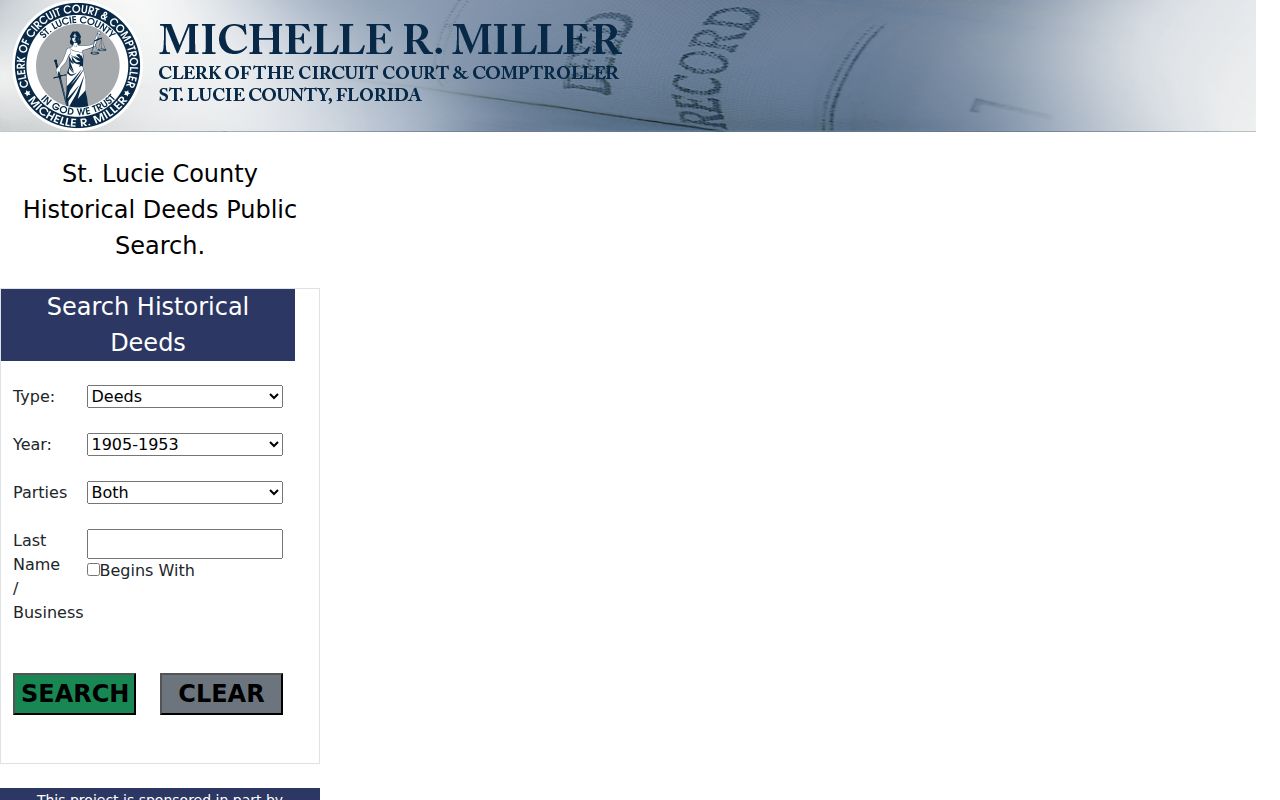
The screen confirms why researchers must switch tools when a chain reaches the modern index cutoff.
Note: Record execution and recording dates can differ, so keep both when ordering transfers in a Port St. Lucie address history.
Port St. Lucie Permit Address Clues
The City Building Property Search adds a municipal timeline to the deed chain. Enter the house number and street, submit the search, and open the Property KEY. The city advises that less is best. If a full address fails, try the house number alone or a distinctive street term.
A result may show both current-system and Legacy Data address rows. Open both. Duplicate-looking rows are evidence of a database migration, not a reason to discard one set. Permit dates and inspections can help date construction or later work, but the applicant or contractor is not automatic proof of who lived there.
This is a useful Port St. Lucie quirk. It can preserve a form of the address that unlocks an older file even when the modern parcel label does not match.
Request Missing Port St. Lucie Records
When the deed chain stops in the 1960-1979 band, send a narrow request to the Clerk. Include the party names, approximate year, document type, book and page if known, Property ID, and legal description. The Clerk Research Department request form is the online route; the Recording counter remains the practical fallback for an index gap.
The request page is shown at its official Clerk source.
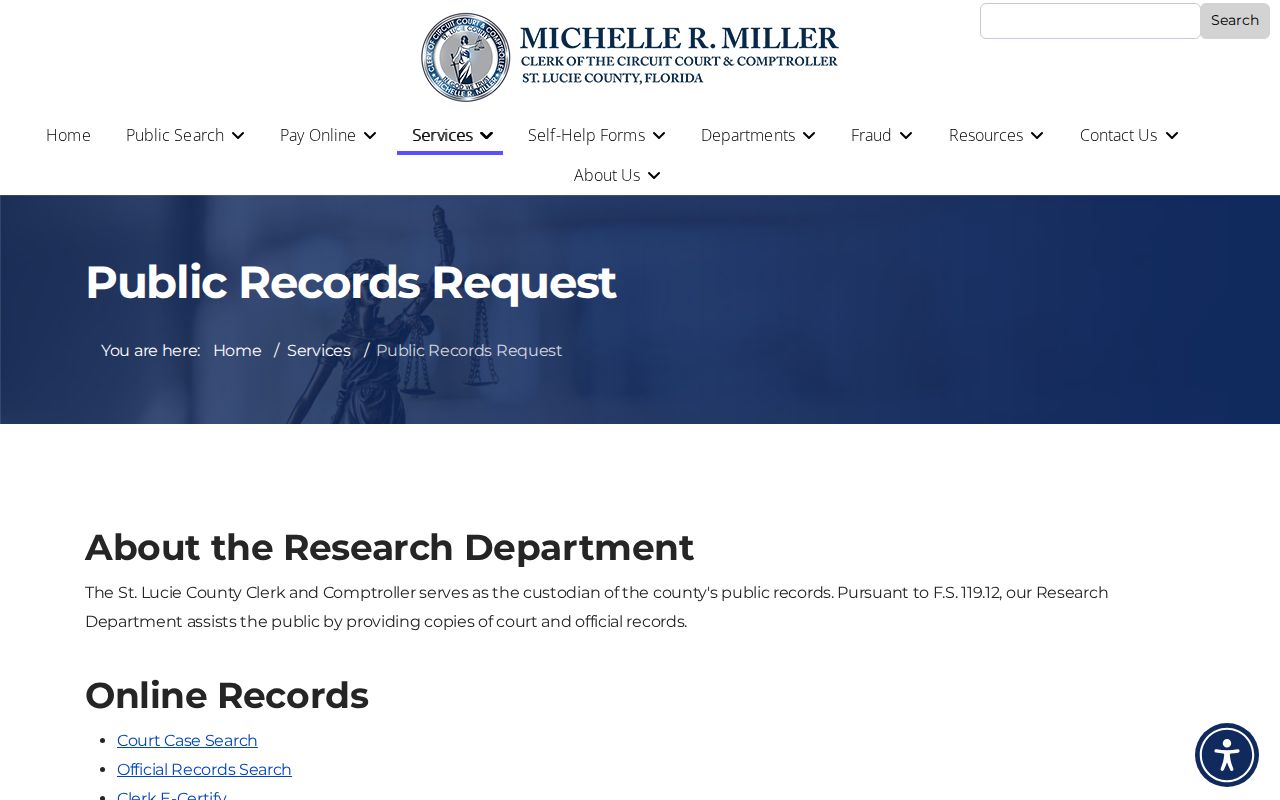
A focused request gives staff a defined record to retrieve. The custodian supplies existing nonexempt records and does not create a house history or conduct genealogy.
Port St. Lucie Owners Versus Occupants
Ownership and occupancy answer different questions. A deed proves a named party received an interest in the land. A tax roll identifies the owner and the address used for tax notices. Neither source lists every renter, child, relative, or other household member who may have lived at that Port St. Lucie address.
Use the ownership interval as a frame, then seek household evidence inside it. Directories may list an adult householder, spouse, occupation, and residence. A census may show household members, relationships, and tenure. Permits date work. Probate can explain a transfer after death. Each source has a limited job.
House-history rule. Treat every name as tied to a dated record, not as proof that the person occupied the address for the full ownership period.
Port St. Lucie Past Resident Households
For the early county period, NARA identifies Fort Pierce directories including St. Lucie County for 1916, 1918, 1920-1923, 1927-1928, and 1931. Search Fort Pierce and county headings because Port St. Lucie did not become a city until 1961. The directory collections and entry abbreviations are covered more fully on the Port St. Lucie city directory page.
Pair the 1920 directory with the 1920 census, and the 1931 edition with the 1930 census. Record the printed address and all named household members before comparing the sources. The sequence is simple:
- Find the address or family in the nearest directory edition.
- Check the census year closest to that edition and confirm household names and tenure.
- Compare the result with deeds and probate so a same-name person is not attached to the wrong parcel.
- Move one directory year at a time, noting spelling, route, and address changes.
NARA's census research gateway explains access to public federal census schedules.
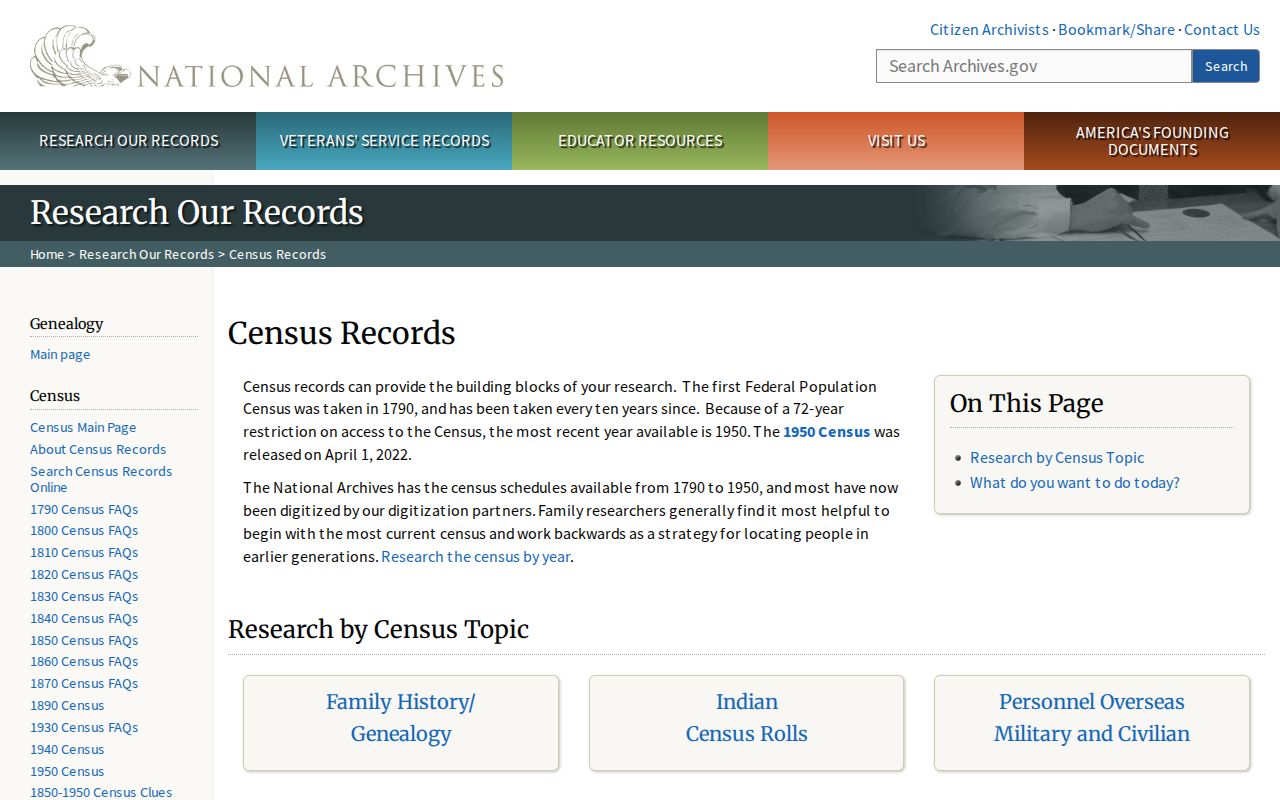
The federal schedule can add relatives and renters that do not appear in the deed chain, while the deed keeps the address tied to the right land.
When a person disappears from the local trail, search probate and a reliable obituary. Probate may name heirs or explain a deed from an estate. An obituary can suggest relatives and a later place, but names and relationships should be checked against the probate file or an official vital record.
After 1950, the federal census closure leaves a larger gap. Bridge it with deeds, dated permits, newspaper notices, school yearbooks, and any verified directory edition. Never assume that a missing name means the person had left Port St. Lucie. The edition may be absent, the address may have changed form, or the household member may not have been listed.
Lawful use. Research previous residents for house history, family history, or an heir trail. Never use a record to track, threaten, or harass a living person.