
Port St. Lucie Lookup Sources
No public roll gives a full, current household list. A careful Port St. Lucie resident lookup matches the question to the record. The Property Appraiser ties an owner to a parcel. The Clerk records deeds and indexes court parties. Elections officials verify registration, while Florida custodians issue vital records under separate access rules.
| Record | What it confirms | Where | Access |
|---|---|---|---|
| Property roll | Owner, situs, mailing address, parcel | Property Appraiser | Free parcel card |
| Official records | A named party in a deed, lien, or other instrument | Clerk Acclaim | Free index and public images |
| Voter record | Registration matching exact inputs | Florida voter status | Self-check or lawful file request |
| Court docket | Party role, case type, dates, events | St. Lucie case search | Public cases free |
| Vital record | A marriage, divorce, birth, or death event | Florida Vital Statistics | Public and restricted classes differ |
| Business or license | Filed role, credential, status, or address | Sunbiz and state boards | Free search |
Begin with the most precise fact. An address points to the parcel roll. A full name points to ownership, recorded instruments, and court cases. A business name belongs in Sunbiz. Keep the original spelling and also test initials, hyphens, and surname particles.
Port St. Lucie Resident Court Records
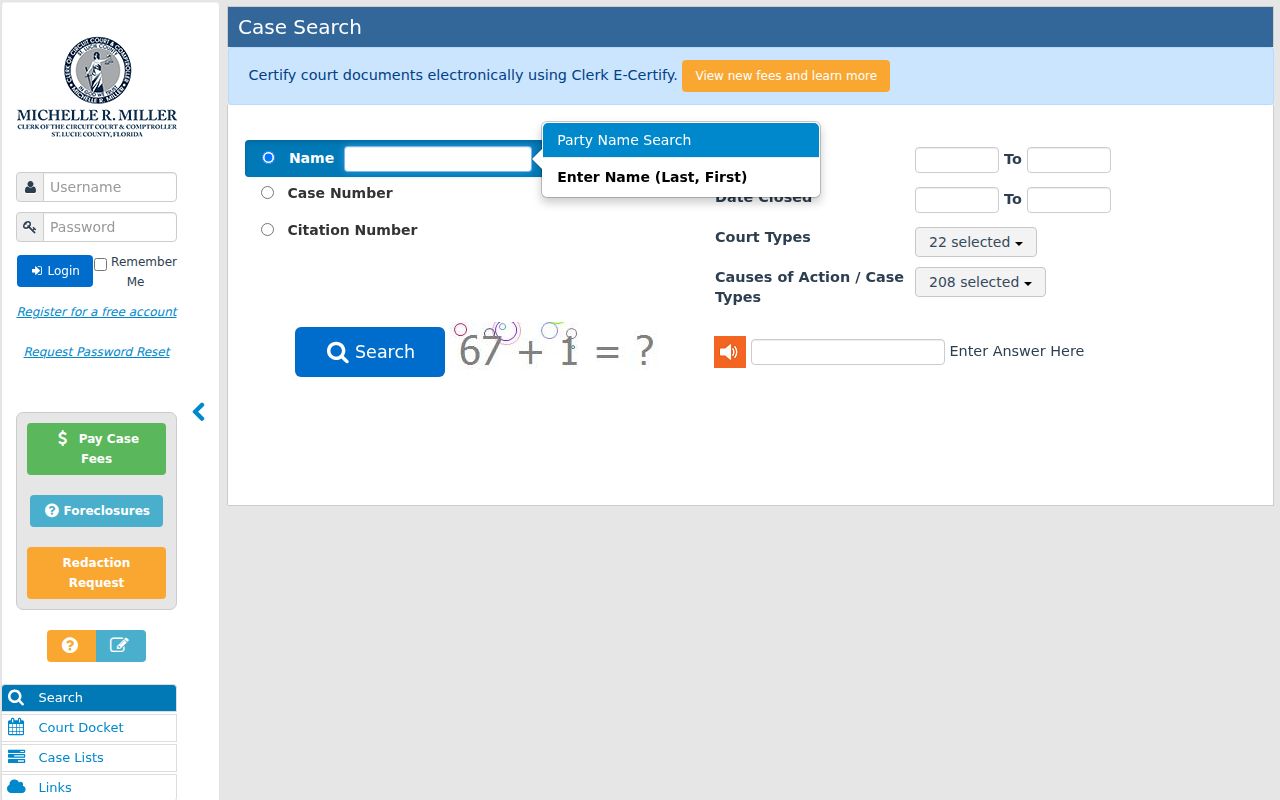
Port St. Lucie has no municipal court. The St. Lucie County Clerk serves the Nineteenth Judicial Circuit and indexes Circuit and County matters, including civil, criminal, family, probate, traffic, small claims, and municipal ordinance files. Search a party as Last, First, then limit the opened or closed date and court type. A same-name hit shows only that a name was indexed. It does not establish identity, fault, or outcome.
| Search control | How it narrows the lookup |
|---|---|
| Name | Primary party search in Last, First order |
| Case or citation number | Returns a known file |
| Date opened or closed | Separates names by time |
| Court type | Limits results to probate, civil, traffic, or another division |
| Cause or case type | Focuses the selected division |
The county case-search form shows those controls together.
Use the party role, filed date, judicial officer, docket events, and disposition before deciding whether the file concerns the intended person.
Port St. Lucie Lookup Results
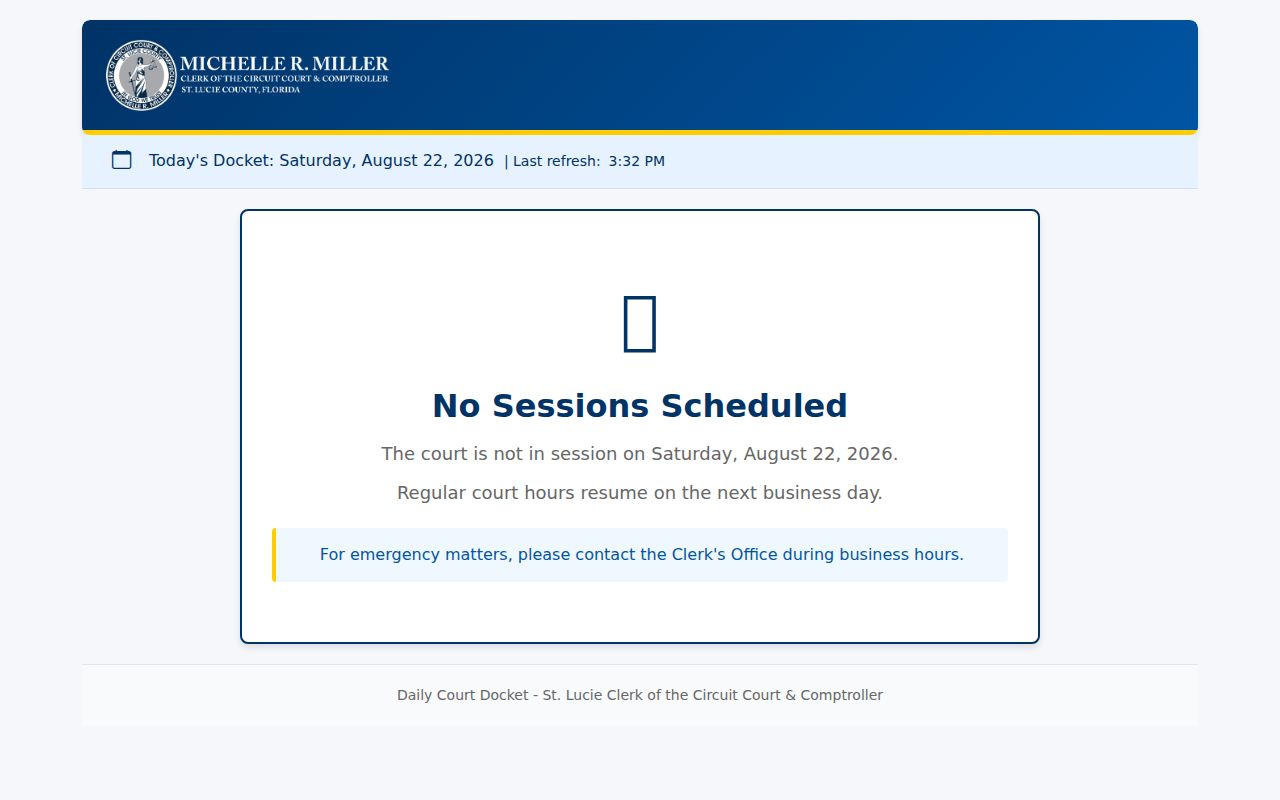
The Clerk's daily docket accepts a name, case number, or judge. Results may show both sides, case number, time, location, case and event type, judge, and attorneys. A listing is a schedule, not a ruling. Case detail can add status, filed and closed dates, party roles, hearings, events, and linked public documents.
The current St. Lucie daily docket displays that event-level information.
A court result inventory should preserve each field before comparing it with another source:
- Plaintiff, defendant, or other party names and their exact roles
- Case number, status, case type, and filed, opened, or closed dates
- Start time and hearing location, including Port St. Lucie, Fort Pierce, or Virtual Court
- Event type, judge, and attorneys shown for both sides
- Docket events, hearings, disposition, and links to public documents
Sealed files and protected juvenile, mental-health, victim, and family information stay off public screens. Free registration expands some document access. The Clerk's Research Department supplies eligible copies when the portal is incomplete, generally in two to seven business days.
Florida Rule of General Practice and Judicial Administration 2.420 controls confidential judicial records. A missing image can reflect that rule or a statutory protection, not an empty case file.
Note: Filing allegations are not findings, and a scheduled hearing does not show how the court resolved a case.
Verify Port St. Lucie Residents
A sound resident lookup uses independent records, not repeated copies of one source. Match a middle initial, address period, parcel description, business role, or known relative. City alone is too broad in a fast-growing place where old addresses go stale and many people share a surname.
- Anchor the name to a parcel or filed address. Note whether it is a physical situs, owner mailing, or business address.
- Search recorded instruments and court parties with name variants. Limit dates to the period that matters.
- Check a separate marriage, probate, voter, business, or license source. Compare roles and dates.
- Open the record image or request a certified copy when the exact wording matters.
- Docket
- The ordered list of filings, hearings, and events in a case.
- Index versus image
- An index is a finding aid. The image is the filed document and often has fuller context.
- Certified copy
- A copy authenticated by the custodian, usually for an added charge.
Port St. Lucie Vital Records
Vital records confirm an event or named relationship, but access depends on type. Florida birth records under 125 years old are restricted. Death certificates without cause are public to adults, while cause-of-death information stays restricted for 50 years. Marriage and divorce certificates are public. Recent records and full divorce judgments may need to come from the issuing Clerk.
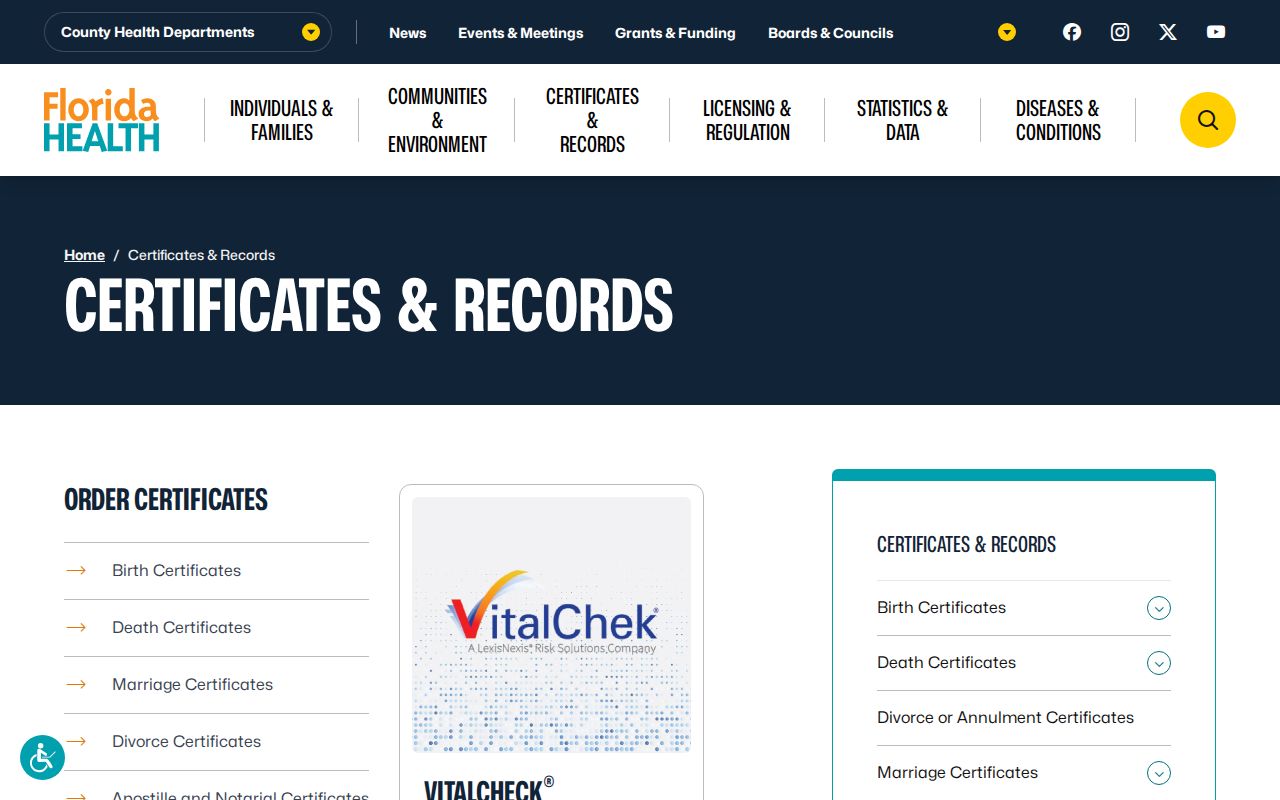
The Florida vital-record application gateway separates forms and order routes.
Applications ask for event facts, requester identity, relationship, and proof of eligibility where needed. Current computer certificates often process in three to five business days, excluding mail. Older or amended records can take longer. Statewide requests go to the Florida Bureau of Vital Statistics at 1217 N Pearl Street, Jacksonville, or by mail to PO Box 210, Jacksonville, FL 32231-0042. The walk-in office is open weekdays from 8 a.m. to 4:30 p.m.; call 904-359-6900. VitalChek is Florida's only endorsed contracted online and phone vendor.
| Record | State base fee | Other researched charges | Access note |
|---|---|---|---|
| Birth | $9 first computer certificate or $14 first photocopy | $4 extra copy, $1 shipping, $10 rush | Restricted when under 125 years |
| Death | $5 first certificate | $4 extra copy, $2 each extra search year up to $50, $1 shipping, $10 rush | No-cause copy is public to adults; cause restricted for 50 years |
| Marriage or divorce | $5 first certificate | $4 extra copy, plus applicable year-search, shipping, or rush charges | State abstracts begin June 6, 1927 |
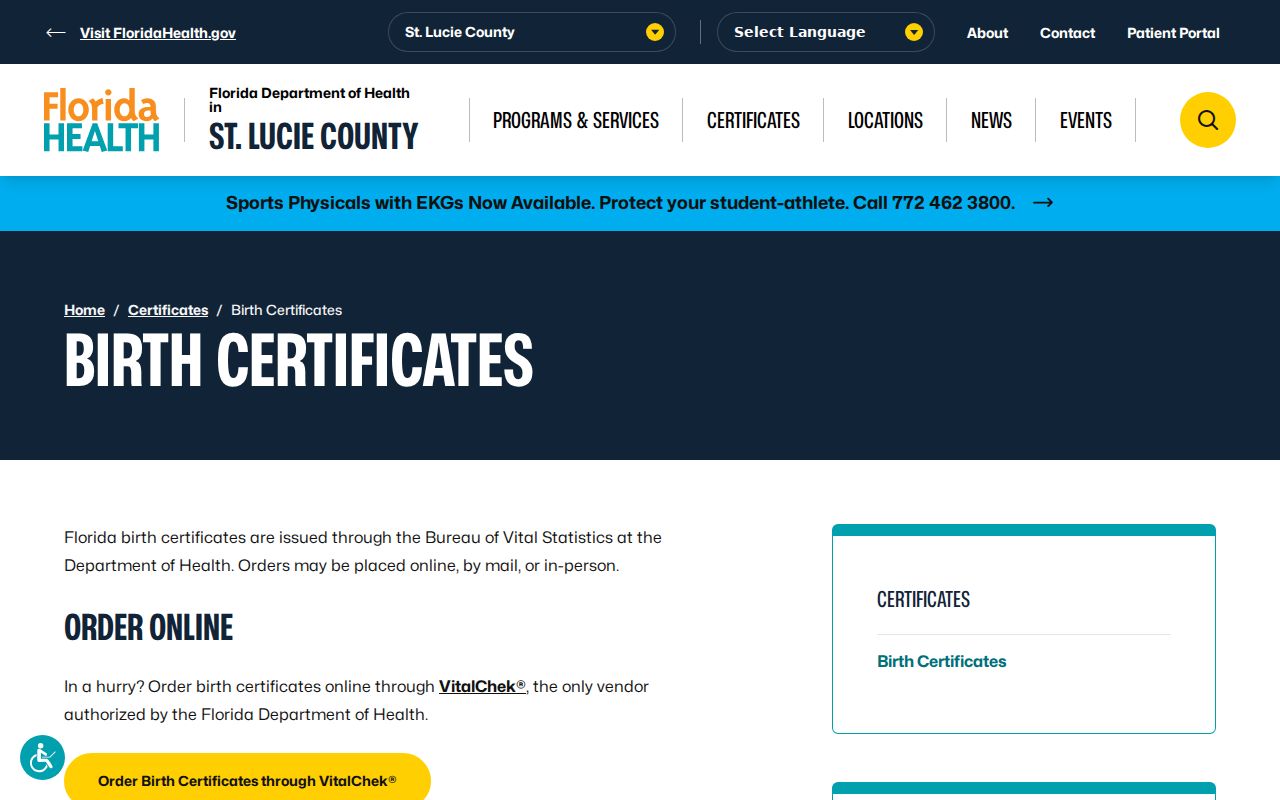
The local birth counter at 5150 NW Milner Drive in Port St. Lucie accepts eligible applicants on weekdays from 8 a.m. to 4:30 p.m., closing from noon to 12:30 p.m.; call 772-873-4932. It charges $17 per birth certificate, with optional charges of $10 for rush service, $3 for a folder, and $1 for shipping. Pre-1930, sealed adoption, paternity, and court-order records route to Jacksonville.
The local Port St. Lucie birth-certificate service explains the counter route and eligibility.
The local office can shorten a routine birth-certificate request, while restricted and older classes still follow the statewide process.
Port St. Lucie Resident Affiliations
Business and license records help separate people who share a name. Sunbiz searches entities, fictitious names, officers, registered agents, ZIP codes, and street addresses. Details show status, dates, roles, addresses, and filing PDFs. An agent address may be an office, so it is not proof of a home.
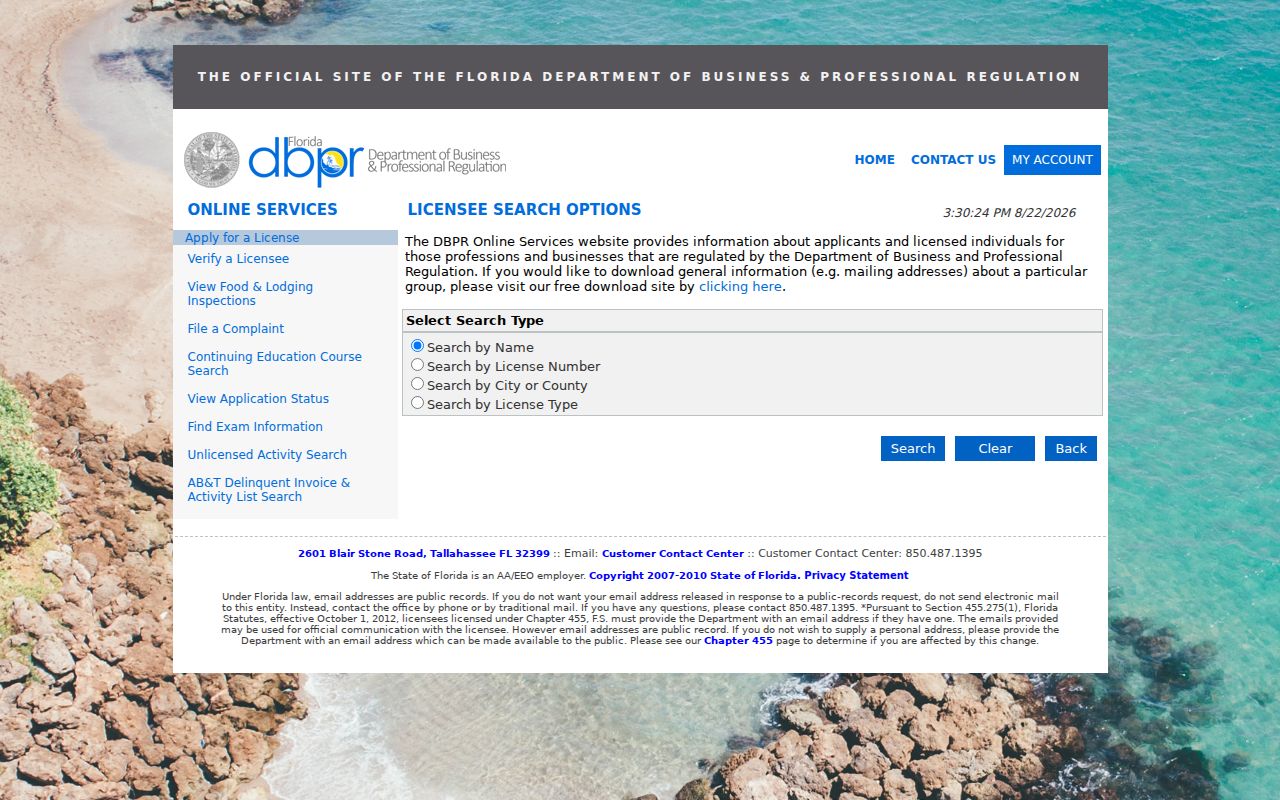
DBPR searches by name, license number, city or county, and license type. Health practitioners use MQA. A credential confirms status and disclosed practice facts, not a household. The DBPR license lookup shows the available filters.
Health practitioners use a separate official system. The Florida MQA practitioner lookup searches a practitioner name, license, or profession and returns profile and discipline details.
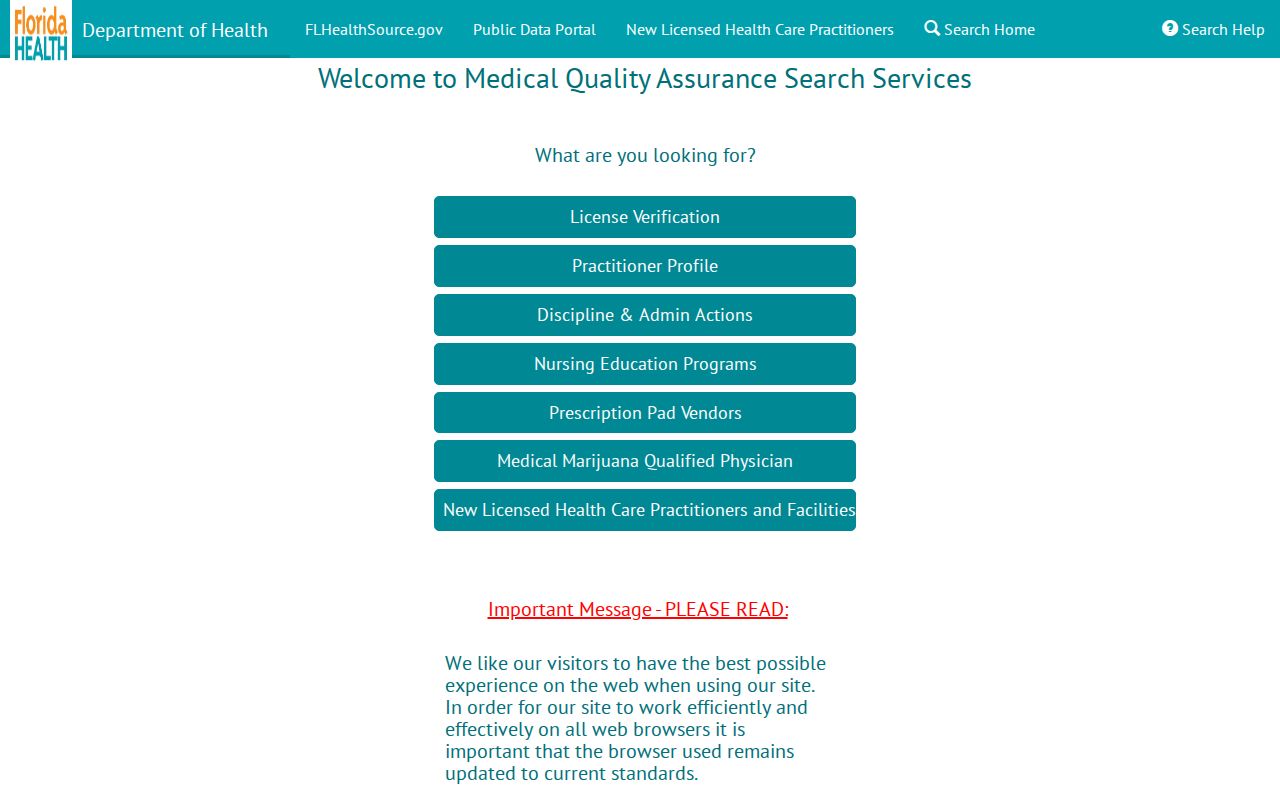
The MQA record confirms the credential and disclosed professional profile, not the person's home or household.
For a local firm, compare the state filing with the Port St. Lucie Business Tax Receipt and any state credential. A city receipt does not replace the county receipt or a professional license.
Port St. Lucie Resident Heir Lookup
Probate, deeds, death evidence, and obituaries can reconnect an heir trail after an old Port St. Lucie address. Establish the decedent first. Limit the court portal to Probate/Guardianship, Formal Administration, or Will, then record the case number. Public petitions, orders, and inventories may name interested persons, subject to redaction.
Search those names in official records for estate deeds. Funeral notices may supply relationship leads, but confirm them with probate or a vital record. For an adopted person or birth parent, use Florida's official registry and restricted vital-record process. Public directories cannot bypass sealed adoption rules.
Note: A custodian supplies existing nonexempt records; the office does not create a family tree or a new resident list.
Port St. Lucie Records Requests
Online access is one channel. The Clerk's Research Department accepts requests for eligible court and official-record copies. Give name variants, record class, approximate year, and any case number, book/page, instrument number, or parcel ID. Avoid sending the same request through several channels.
Florida Public Records Law does not require a requester to cite Chapter 119, write the request, or explain its purpose unless a specific law says otherwise. The response period is the reasonable time needed to retrieve and review records. The Port St. Lucie City Clerk accepts municipal requests through its portal, in person, email, mail, phone, or fax. A narrow date range and record type can reduce review time and possible labor cost.
If an index is wrong, contact the custodian. Determine first whether the mistake is only in the index or in the filed document.
The Clerk also provides in-person and request routes for eligible records not shown online. Give staff the known instrument, case, parcel, or time range rather than rebuilding a deed chain here. Address-history research belongs in the Previous Residents workflow; for one person, the resident lookup only needs the specific record that verifies a dated name or role.
For municipal material, name the department and subject. A request for a narrow set of council correspondence, permits, or code documents is easier to retrieve than a request for everything tied to one person. Port St. Lucie generally waives labor under thirty minutes but may charge when review takes longer. Ask for an estimate before authorizing a broad search.
Limits on Port St. Lucie Lookup
Florida opens many records, but not every personal field. Social Security and driver-license numbers, voter signatures, protected addresses, sealed court files, and restricted vital details remain confidential. The Attorney General's Safe Address program gives qualifying relocated victims a substitute mailing address. Section 119.071 also protects designated information in defined cases.
A Port St. Lucie resident lookup must honor those lines. Commercial compilations can merge same-name people and retain stale addresses. Official indexes also need context: a deed confirms a transaction, a docket confirms a case entry, and a license confirms a credential.
Voter data has its own limits. Florida generally treats name, residence address, date of birth, party, phone, and email as public registration fields, but signatures cannot be copied. Social Security numbers, state identification numbers, and the registration source remain closed. Vote history shows participation, never ballot choice. Protected professions and confidentiality-program participants may have designated details withheld.
Corrections must go to the office responsible for the source. The Property Appraiser handles parcel-roll data, the Clerk handles court and recorded indexes, and the relevant board handles a license. A private compilation cannot amend the original record. Save the source URL, access date, and the exact field that appears wrong so staff can tell an index mistake from a defect in the filed paper.
Lawful use. Use resident records for lawful personal research. Never stalk, harass, intimidate, impersonate, or expose protected information.