
Finding Port St. Lucie Residents
Choose the first record from the fact already known. An address points to the Saint Lucie County Property Appraiser. A current owner's name can lead to a deed, lien, or mortgage in the Clerk's official records. A registered voter can verify personal status through the county election tool, while a lawful request for voter data follows a different process. An older surname belongs in county library databases and the verified Fort Pierce directory runs.
The Port St. Lucie residents directory cannot name every person in a household. Parcel cards identify owners, not all occupants. A tax mailing address may belong to an owner who lives elsewhere, and protected addresses may be withheld. Treat each result as one piece of evidence.
- Search the county property roll by owner, street address, or parcel. Save both the situs and mailing address.
- Use the Clerk's name index to connect an owner with deeds and other recorded instruments.
- Check the court party index or voter-status route only when that record answers a clear question.
- For past residents, search Fort Pierce and St. Lucie County directory headings, census records, and newspapers.
- When no portal covers the needed nonexempt file, send a narrow Chapter 119 request to the correct custodian.
Port St. Lucie Directory Offices
Port St. Lucie has no city recorder of deeds and no municipal court. The durable resident trail is kept by St. Lucie County. The Clerk records land instruments and maintains county court files. The Property Appraiser connects an address to a parcel and owner. The Supervisor of Elections controls voter information. City Hall adds permits, code matters, minutes, contracts, and departmental files through its Public Records Center.
Send a request to the office that created or keeps the record. The City Clerk cannot certify a county deed, and the Property Appraiser cannot change a court docket. When a portal omits a protected image or an older record band, ask that custodian about counter, mail, phone, or web-request access. Give a name, record type, date range, and known file number when possible.
St. Lucie County Clerk
Recording Department
Fort Pierce, FL
Recording records and access
Saint Lucie County Property Appraiser
250 NW Country Club Drive
Port St. Lucie, FL
772-462-1000
Property and map search
St. Lucie County Elections
Supervisor of Elections
St. Lucie County, FL
Voter information lookup
Port St. Lucie Property Roll
The Property Appraiser Real Estate Search is the best first stop for an address. Its parcel card supplies the Property ID, legal description, owner, situs address, mailing address, values, exemptions, building details, and sales. Situs means the physical parcel location. The mailing address is where tax notices go, so a difference between them does not identify a renter or prove where the owner sleeps.
Homestead exemption can support owner-occupancy, but it does not identify every household member. For a whole street or ZIP, the office also publishes free CAMA and GIS downloads joined by Property ID. Custom data work is scoped and billed at actual labor cost.
| Search field | Use | Reading rule |
|---|---|---|
| Owner name | Find parcels tied to a person or entity | Compare middle names and mailing addresses |
| Street address | Open one physical property | Keep the quadrant prefix |
| Property ID | Join parcel, map, and data records | Use as the stable county key |
| Legal description | Connect lot, block, and subdivision to deeds | More durable than a street label |
Two Port St. Lucie Deed Indexes
The Clerk's chronology is split. Acclaim Official Records covers public instruments from 1980 forward. The separate Historical Deeds search covers 1905 through 1960. Records from 1960 through 1979 remain a transition band that may require book indexes, Clerk staff, or a counter request.
Acclaim's guided questions cover deeds, satisfied mortgages, liens and judgments, releases, divorces, military discharges, wills, and all documents for a name. The name route uses Last, First and accepts a minimum of three characters. Date limits help separate people who share a name. A result may show grantor and grantee roles, instrument number, book and page, execution and recording dates, legal description, related instruments, and public images.
The successful capture links directly to the official records search. 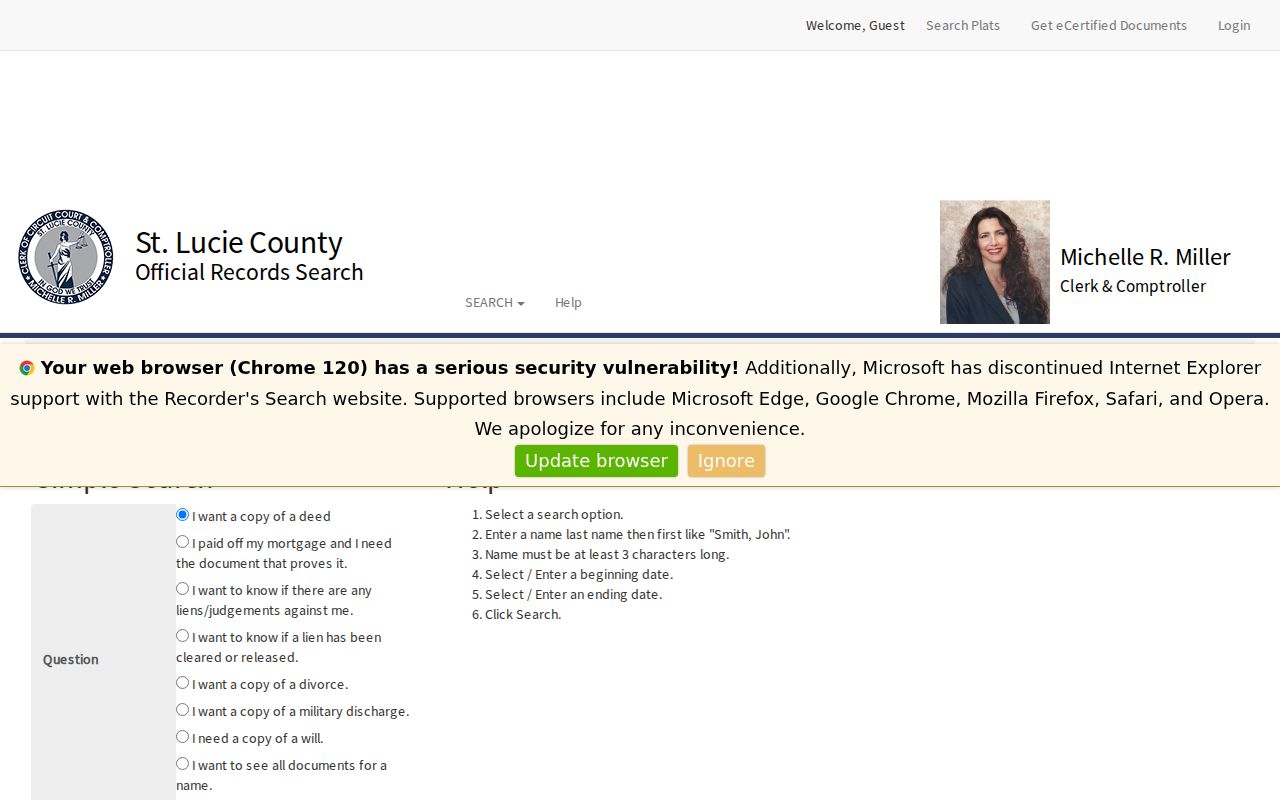 Its guided document choices explain why a narrow search often works better than entering a name without context.
Port St. Lucie Directory Terms
Public indexes use short record terms. Keeping them distinct prevents a Port St. Lucie residents directory result from being stretched beyond what it proves.
- Roll
- An official list maintained for a stated purpose, such as assessment or voter registration.
- Index
- A finding aid that points to a document; an index entry is not always the full image.
- Parcel
- A mapped unit of land used for assessment and record links.
- Criss-cross directory
- A historical directory section arranged by street and number instead of surname.
- Grantor and grantee
- The party transferring an interest and the party receiving it.
Record the exact spelling, party role, date, and source. Two indexes that repeat the same underlying filing are not two independent confirmations.
Current Port St. Lucie Directories
Current official sources list people only in relation to a government function. The property roll names owners. Recorded instruments name parties. Voter records cover registered voters and apply confidentiality rules. Court indexes name case parties but do not prove that an allegation was true. A city permit names a parcel, project, or contractor and is not a permanent household roster.
| Source | Who It Lists | Keeper | Access |
|---|---|---|---|
| Property assessment roll | Owners and parcels | Property Appraiser | Free portal and downloads |
| Voter information | Registered voters | Supervisor of Elections | Self-check or requested extract |
| Official records index | Parties to deeds, liens, and other instruments | County Clerk | Free index and public images |
| Court case index | Named parties and docket events | County Clerk | Free basic search |
| City permit files | Properties, permits, inspections, contractors | Port St. Lucie Building | Free address search |
Pick the source that answers the narrow question. To verify one name, use the step order on the Port St. Lucie resident lookup page and compare at least two independent official records. Commercial compilation tools may be convenient, but they can merge names, repeat stale addresses, and hide source dates. Official records make their custodian and purpose clear.
Correctional records use separate custodians. The captured Florida Department of Corrections search covers state prison and supervision records. 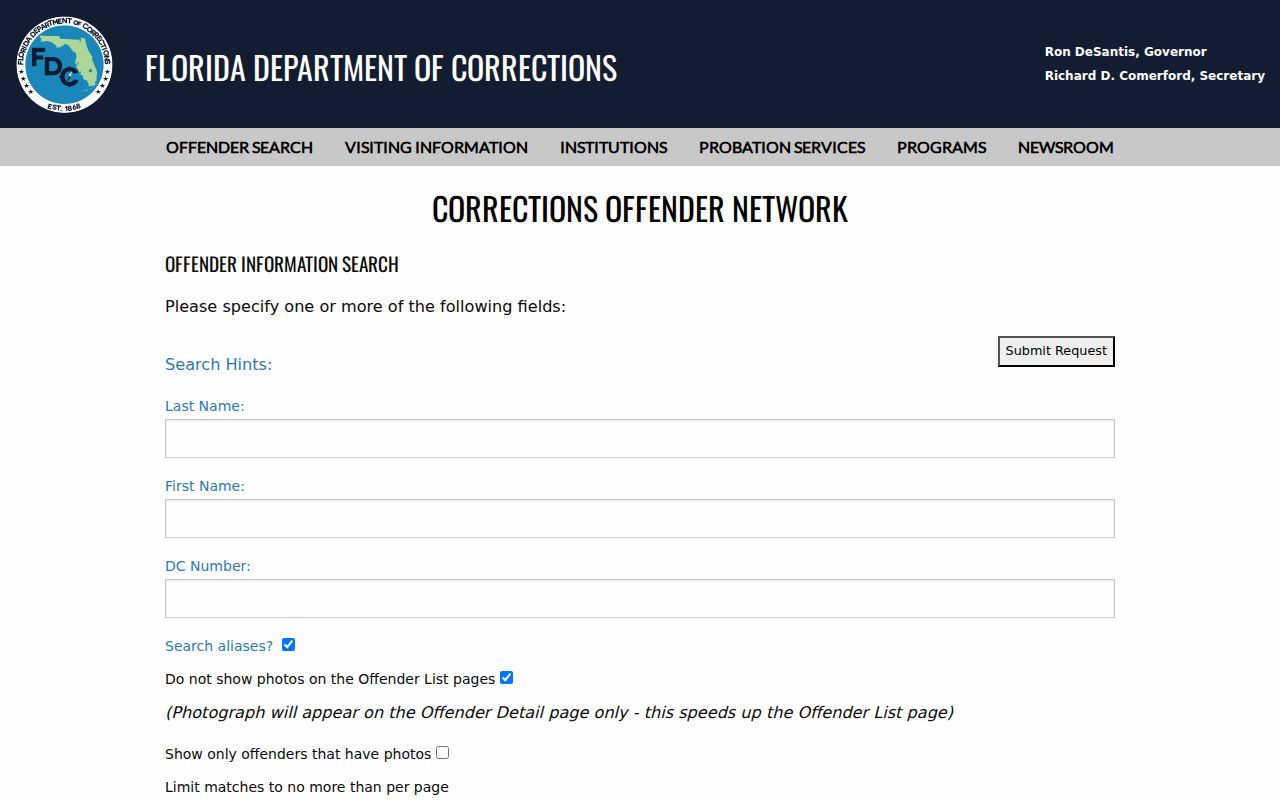 It does not replace the St. Lucie County Sheriff's current inmate roster or prove a present Port St. Lucie home address.
The captured FDLE offender and predator search provides name, area, and neighborhood modes with a legal warning. 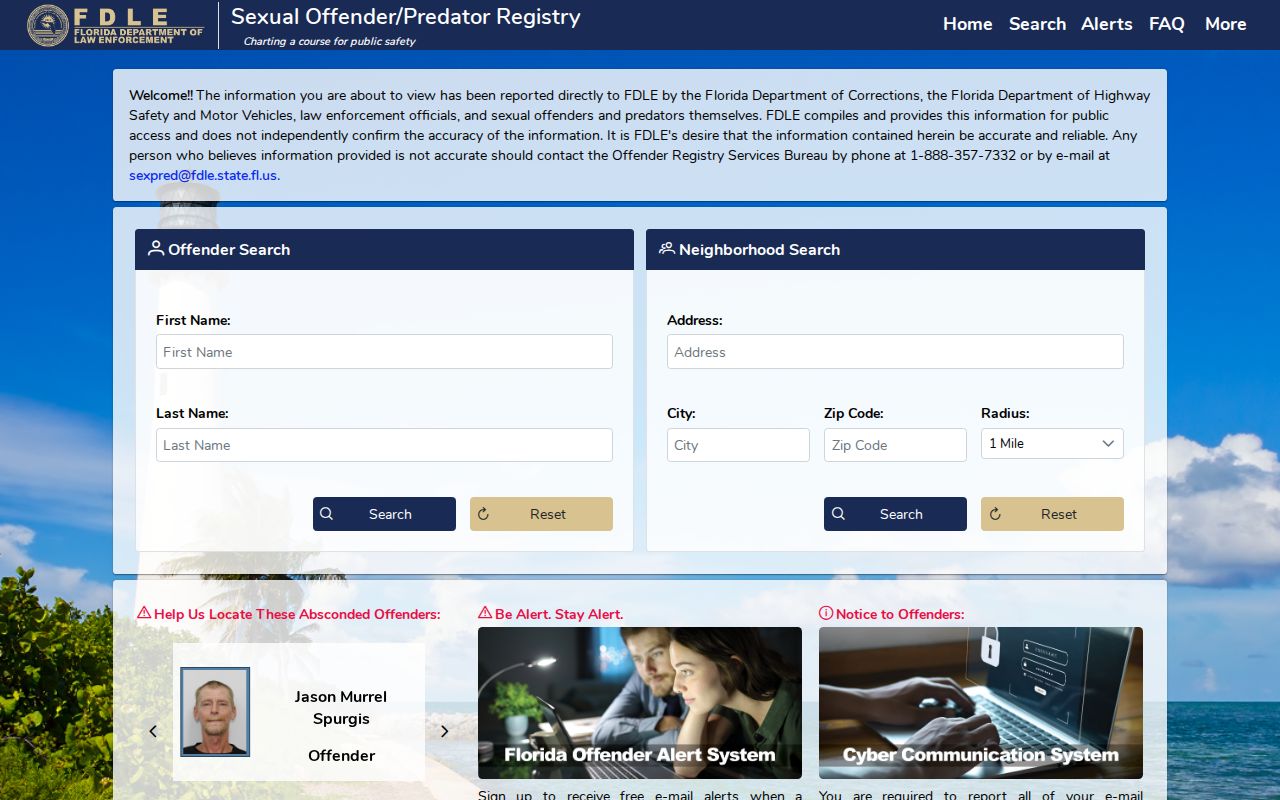 Registry results require identity care, and FDLE states that fingerprints are needed for positive identification.
Port St. Lucie Permit Addresses
The city's Building Property Search adds work history to a parcel. Enter a house number and street, submit the search, then open the Property KEY. City instructions say “less is best.” When a full address fails, try the house number or one distinctive street token. Always preserve SW, SE, NW, or NE when checking a result.
Two address rows may appear because the system retains both current and legacy data. Open both. This is a local database migration quirk, not automatic proof of two different properties. Permit lists and inspections can date activity, yet they do not establish every occupant. Code files and garage-sale permits are also dated events, not resident rolls.
Port St. Lucie Court Directory
Port St. Lucie is served by Florida's Nineteenth Judicial Circuit and has no separate municipal court. The St. Lucie court case search accepts a party name, case number, or citation number, plus optional opened and closed date ranges. Court-type filters include circuit and county civil, criminal, traffic, family, probate, guardianship, small claims, ordinance, and other divisions.
A docket result can show case number, status, dates, party roles, judge, events, hearings, and linked public documents. It shows that a file exists, not that every claim is true. Mental-health, juvenile, sealed, and other protected material stays off public screens. Florida has no statewide trial-court party index, and the appellate ACIS system is not a substitute.
The successful county court search capture shows the local interface. 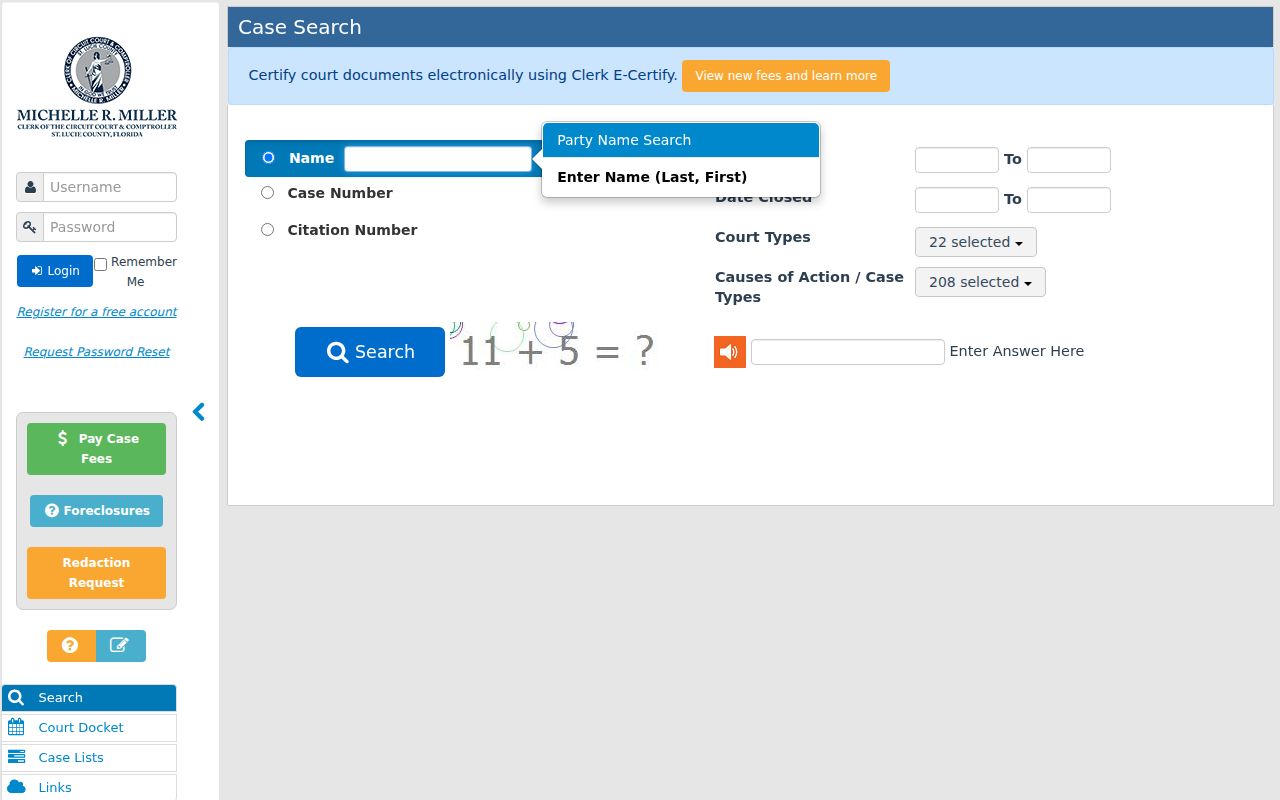 Its division filters help separate same-name parties and keep a Port St. Lucie directory search tied to the right kind of file.
Port St. Lucie Voter Records
Florida voter-registration records are generally public under section 97.0585. Name, residence address, birth date, party, phone, and email may be available. Social Security numbers, driver-license or state-ID numbers, the registration source, and copied signatures are confidential. Address Confidentiality Program participants and qualifying protected occupations can shield designated fields.
The county status tool is an individual verification route, not an open name or street browse. A requested extract can be sorted by precinct street or household and filtered by city, precinct, party, age range, registration dates, and voting history. Vote history shows participation only. It never reveals ballot choices.
Port St. Lucie Postal Boundaries
A Port St. Lucie postal address does not always establish city jurisdiction. River Park sits just north of the city boundary and remains unincorporated despite its local history and mail associations. About 24,000 acres were annexed from 2000 through 2008, much of it west of Interstate 95. Tradition and St. Lucie West therefore have different record eras from original General Development Corporation plats.
Check the parcel map's city-boundary layer before asking City Hall for permits or code files. Eastern neighborhoods tend to offer longer post-incorporation permit trails. Western master-planned parcels are better served by current deeds, plats, development orders, association records, and digital permits. Geography decides which custodian is likely to answer.
The city's six core postal zones repeatedly shown in official material are 34952, 34953, 34983, 34984, 34986, and 34987. The 34982 area belongs at the boundary edge and must be checked address by address. ZIP 34952 covers much of the southeast and river geography. ZIP 34953 points southwest, while 34983 spans north-central and east-central areas. City Hall anchors 34984. St. Lucie West is closely tied to 34986, and Tradition plus western growth dominate 34987.
Postal codes are routing tools, not neighborhood deeds. The same ZIP can cross common civic names or more than one quadrant prefix. A current neighborhood identity may also be newer than the subdivision section beneath it. The NICE program lets residents propose names and boundaries for areas that were once known mainly by numbered General Development Corporation sections. When an old search fails, use the legal description, subdivision, lot, and block instead of expecting today's neighborhood name in the index.
Road direction is equally important. SW Port St. Lucie Boulevard and SE Port St. Lucie Boulevard are not interchangeable. Search with the house number and a distinctive street word, inspect the returned parcel or property key, then restore the correct quadrant in notes. This method handles legacy abbreviations without merging two separate addresses.
Port St. Lucie Records Requests
Florida's access right begins in article I, section 24 of the state constitution and is implemented by Chapter 119. A requester usually need not cite the law, submit in writing, or explain a purpose. There is no fixed response-day deadline. The custodian gets a reasonable time to retrieve records and review exemptions.
Port St. Lucie's Public Records Center accepts requests through its portal, in person, by email, USPS, phone, or fax. The Clerk has a separate Research Department request form. Ask for a defined department, record type, address or name, and date span. Broad requests can produce labor and redaction charges. The city waives labor under 30 minutes but may charge beyond that.
Lawful use. Use Port St. Lucie public records for legitimate personal research. Do not use names, addresses, or images to stalk, harass, threaten, impersonate, or harm anyone.
Verify Port St. Lucie Names
Rapid growth makes the same-name problem practical. Port St. Lucie grew from 204,851 people in the 2020 census to an estimated 258,575 in 2024. An old address can become stale fast as a person moves between original city plats, St. Lucie West, and western master-planned communities. Never merge two people because a surname and first initial match.
Start with the least ambiguous fact, such as a full parcel address, middle name, case number, or document date. Then compare two records made for different purposes. A parcel card and its purchase deed can establish ownership. A court docket and a deed may separate two people with the same name. A business filing can identify a registered agent or manager, but a business address is weak proof of a home address.
Use source dates. The Florida Treasure Hunt name search is free and can supply an old address clue, but unclaimed property is not proof of current residence. The Clerk's free Property Fraud Alert is a prevention tool: it sends email or text when a matching name appears in a newly recorded document, usually within about 24 hours. It does not stop or validate a filing. The account supports up to five person or business names, two emails, and two mobile numbers.
Note: A match becomes stronger when independent official sources agree on a middle name, address, time period, or parcel, not merely the same spelling.
Historical Port St. Lucie Directories
Port St. Lucie was incorporated in 1961, so early residents are normally indexed under Fort Pierce or St. Lucie County. NARA's verified directory inventory lists 1916, 1918, 1920 through 1923, 1927 through 1928, and 1931. Those years are not an annual run. A missing edition cannot prove that a family left the county.
HeritageQuest is available remotely with a St. Lucie County library card. Ancestry Library Edition requires a visit to an open branch or branch Wi-Fi. The namesake Port St. Lucie Branch closed in 2025 for reconstruction, with reopening expected in 2027, so Lewis, Morningside, Pruitt, or Kilmer are the practical alternatives. Pair the 1920 directory years with the 1920 census and the 1931 edition with the 1930 census.
Florida Vital Statistics, probate files, obituaries, deeds, and newspapers can close a family trail when a name disappears. The successful Florida vital-records gateway capture shows the official ordering route. 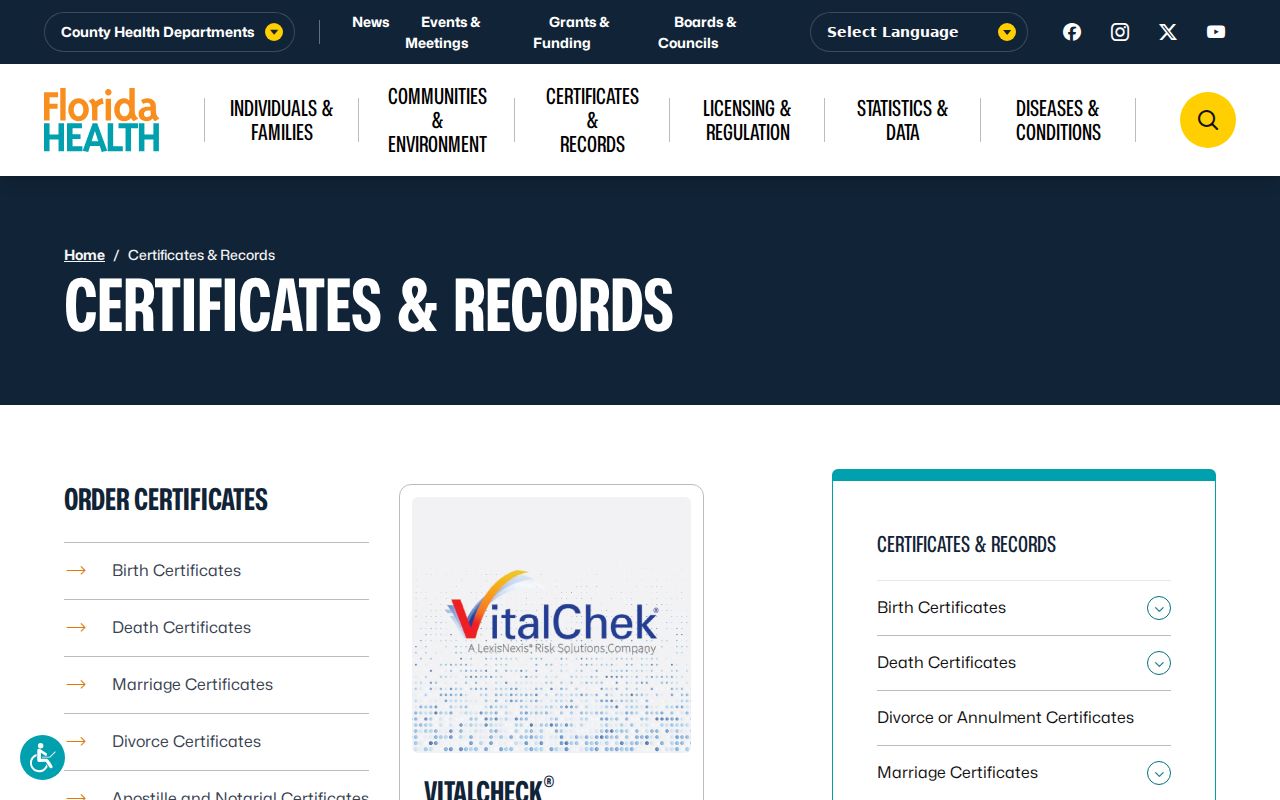 Birth and cause-of-death access remain restricted by law, while public marriage and divorce certificates follow their own ordering rules.